
Purple shampoo, explained
What makers say it is for, and how the law sees it.
Disclosure: We may earn a commission if you buy through links on this page. It does not change our guidance. Affiliate Disclosure
What it is
Purple shampoo is a shampoo that is purple or violet in color. Makers describe it as a shampoo for blonde, bleached, or gray hair that looks yellow or brassy. We have not tested any product, and results vary.
A cosmetic, by law
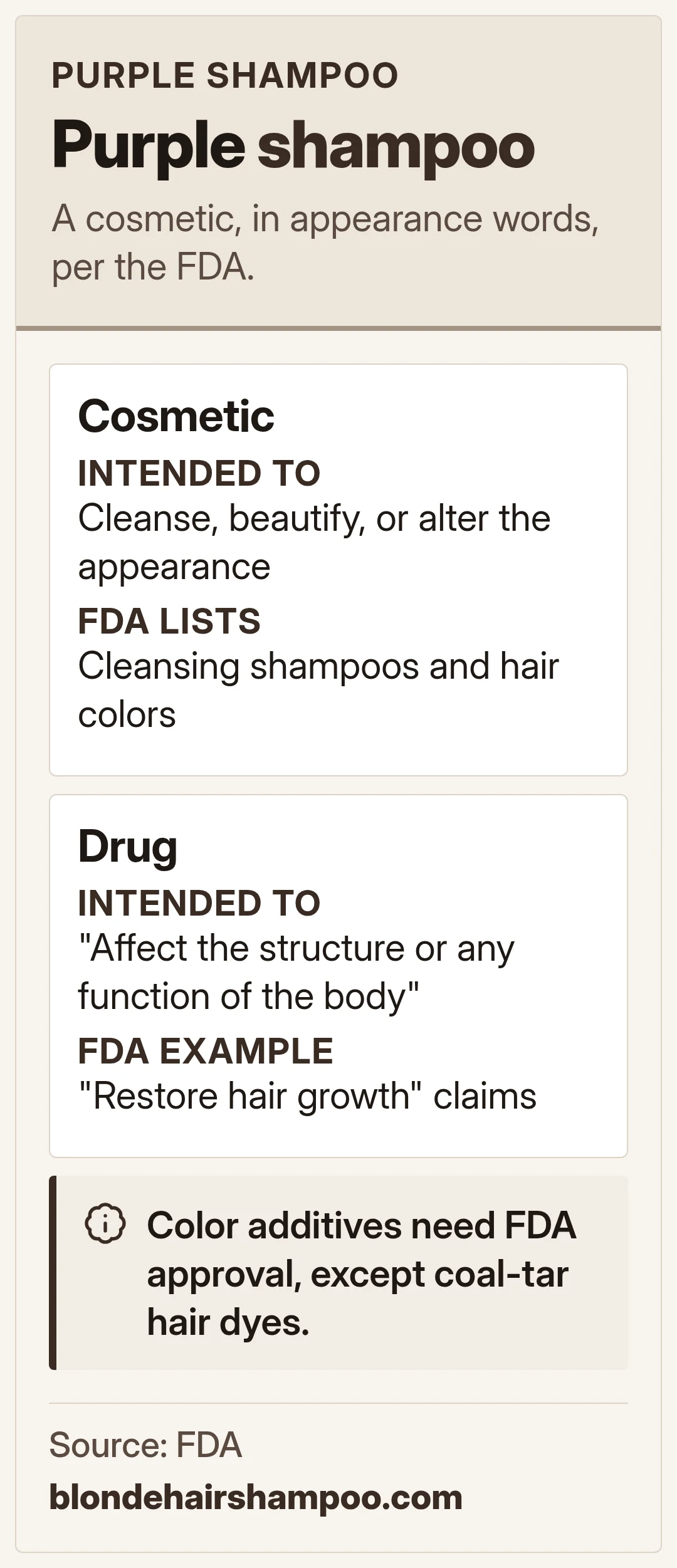
The FDA says the law defines cosmetics as products intended for "cleansing, beautifying, promoting attractiveness, or altering the appearance," and it lists "cleansing shampoos" and "hair colors" among them. We describe purple shampoo in those terms: how hair looks.
Color additives
The FDA says color additives, with the exception of coal-tar hair dyes, need FDA approval before they are permitted for use in cosmetics, and that the approval is for their intended use. That FDA approval covers a color additive, not any shampoo.
What a claim can say
The FDA says a product intended to "affect the structure or any function of the body" is a drug, and it gives claims that products will "restore hair growth" as an example. We write about purple shampoo in appearance words only: color, tone, and how hair looks and feels.
Does it work?
We do not say. We have not tested any purple shampoo, and we publish no before-and-after results. Follow the label directions, and read our guide to using purple shampoo.
FAQ
General information, not medical advice. Follow the label. We suggest testing a new hair product on a small patch of skin first. Keep it out of your eyes, and stop use if irritation occurs. For hair dye, the FDA says to do a patch test every time and never to dye your eyebrows or eyelashes. See a doctor or dermatologist about scalp problems or hair loss.
Next: using purple shampoo
Label first, then the basics.
