

Hair toner, explained
What makers mean by toner, and the FDA steps for hair dye.
Disclosure: We may earn a commission if you buy through links on this page. It does not change our guidance. Affiliate Disclosure
What makers call toner
Makers use the word "toner" for some hair color products and for some toning shampoos. A toning shampoo is a shampoo. We do not say which kind any product is; read its label. The FDA steps below are for hair dye.
How the FDA treats hair dyes
The FDA says coal-tar hair dyes include permanent, semi-permanent, and temporary hair dyes. It says coal-tar hair dyes, "unlike color additives in general, do not need FDA approval," and that coal-tar hair dyes bearing the caution statement and "patch-test" instructions on the label are exempt from the adulteration provision.
The caution statement
The FDA quotes the statement the law sets out: "Caution - This product contains ingredients which may cause skin irritation on certain individuals and a preliminary test according to accompanying directions should first be made. This product must not be used for dyeing the eyelashes or eyebrows; to do so may cause blindness."
Patch test every time
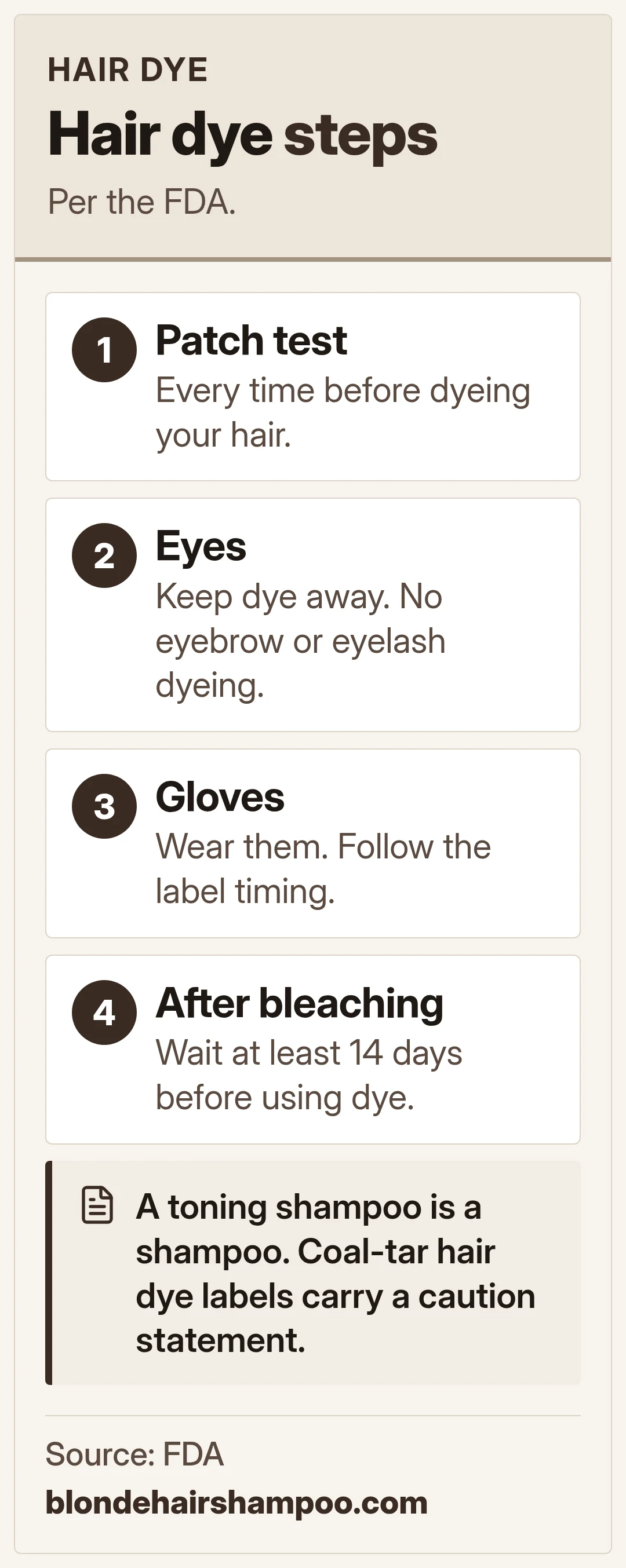
For hair dye, the FDA says to "do a patch test on your skin every time before dyeing your hair." Its hair dye Q&A says to rub a tiny bit of the dye on the inside of your elbow or behind your ear, leave it there for two days, and not use the dye on your hair if you get a rash.
More FDA steps for dyes
The FDA says to follow all directions on the label and in the package, wear gloves, not leave the product on longer than the directions say, keep hair dyes away from your eyes, and "wait at least 14 days after bleaching, relaxing, or perming your hair before using dye."
FAQ
General information, not medical advice. Follow the label. We suggest testing a new hair product on a small patch of skin first. Keep it out of your eyes, and stop use if irritation occurs. For hair dye, the FDA says to do a patch test every time and never to dye your eyebrows or eyelashes. See a doctor or dermatologist about scalp problems or hair loss.


Next: testing a new product
Skin test per the AAD, dye per the FDA.
